“`html
If you have ever dreamed of waking up to warm, buttery layers of goodness that melt in your mouth, then you are in for a treat with this Classic Flaky Croissants from Scratch Recipe. This recipe transforms humble pantry staples into golden, flaky croissants that boast that perfect balance of a crisp outer crust and a tender, pillowy interior. Making croissants at home might seem intimidating, but with clear steps and a bit of patience, you’ll achieve bakery-worthy results that will have everyone asking for seconds. Prepare yourself to embark on a delicious journey filled with layers of buttery magic!
Ingredients You’ll Need
These ingredients are straightforward yet essential to create that signature flaky texture and rich flavor each croissant promises. Every element, from the flour to the butter, plays a crucial role in building those delicate layers and adding subtle sweetness and depth.
- 4 cups (500g) all-purpose flour: The backbone of your dough, providing structure and chewiness necessary for croissants.
- 1/4 cup (50g) granulated sugar: Adds a gentle sweetness to balance the buttery richness.
- 1 tablespoon (10g) salt: Enhances flavor and controls yeast fermentation.
- 1 tablespoon (10g) active dry yeast: The magic that helps your dough rise, making it light and airy.
- 1 1/4 cups (300ml) warm milk: Combines with yeast to activate it and adds moisture for a tender crumb.
- 2 tablespoons unsalted butter, melted: Enriches the dough with flavor and softness.
- 1 cup (225g) unsalted butter, cold and shaped into a flat square: The essential butter block creates those signature flaky layers.
- 1 egg: For the egg wash that gives your croissants a beautiful golden shine.
- 1 tablespoon milk: Mixed with the egg to make the perfect egg wash for baking.
How to Make Classic Flaky Croissants from Scratch Recipe
Step 1: Mix and Knead the Dough
Start by combining the flour, sugar, and salt in a large bowl or your stand mixer. In a separate cup, dissolve the active dry yeast in warm milk and let it sit until it becomes foamy—that’s when you know the yeast is ready to work its magic. Add this yeast mixture along with the melted butter to your dry ingredients. Knead everything together until you get a smooth, elastic dough, which should take about 3 to 5 minutes. Shape the dough into a rectangle, wrap it tightly in plastic, and let it rest in the fridge for an hour. This resting time is crucial for activating gluten and making the dough easier to work with later.
Step 2: Prepare the Butter Block
While your dough chills, it’s time to prepare the butter block that will create those signature flaky layers. Place your cold butter between two sheets of parchment paper, then use a rolling pin to gently flatten it into a 6-inch square. If the butter softens too much during this process, pop it back into the fridge briefly to restore its firmness. Keeping the butter cold ensures your croissants layer beautifully instead of melting into a mess.
Step 3: Encapsulate the Butter with Dough
Roll your dough out into a 12-inch square on a lightly floured surface. Position the butter block diagonally in the center, making a diamond shape with it. Fold each corner of the dough over the butter to fully enclose it, almost like wrapping a precious gift. This careful wrapping seals in that buttery goodness, ready to be rolled and folded into flaky layers.
Step 4: First Fold (Turn)
Roll the dough containing the butter into a long rectangle about 8 by 20 inches. Fold this rectangle into thirds just like folding a letter, creating your first “turn.” This folding technique is what builds the incredible layers inside each croissant. Wrap your dough in plastic wrap and chill it in the fridge for 30 minutes to keep the butter firm and prevent it from melting during the next steps.
Step 5: Repeat Folds
For the perfect rise and flakiness, repeat the rolling, folding into thirds, and chilling process two more times, totaling three “turns.” It’s important to keep the dough cold throughout, so don’t rush this process. Each fold multiplies those layers, turning your croissants into a masterpiece of buttery flakiness that is unrivaled anywhere.
Step 6: Roll Out Final Dough
After the last chill, roll your dough into a large rectangle roughly 1/4 inch thick. This thickness is perfect for shaping your croissants, making sure they bake up light and airy without being doughy.
Step 7: Cut Triangles
Trim the edges for neatness and cut the dough into triangles about 5 inches wide at the base. Using a sharp knife or pizza cutter will help you achieve clean edges, which is essential for even baking and shaping.
Step 8: Shape Croissants
Take each triangle and gently stretch the base a little, then roll it towards the tip, tucking in the ends if you like that classic crescent wrap look. This shaping technique helps create those elegant curves we associate with croissants.
Step 9: Proof Croissants
Place your croissants on a baking sheet and loosely cover them. Let them rise at room temperature for 1.5 to 2 hours, or until they look puffed and slightly risen. This final proofing step allows the yeast to do its job, resulting in croissants that are light and airy inside.
Step 10: Preheat Oven and Prepare Egg Wash
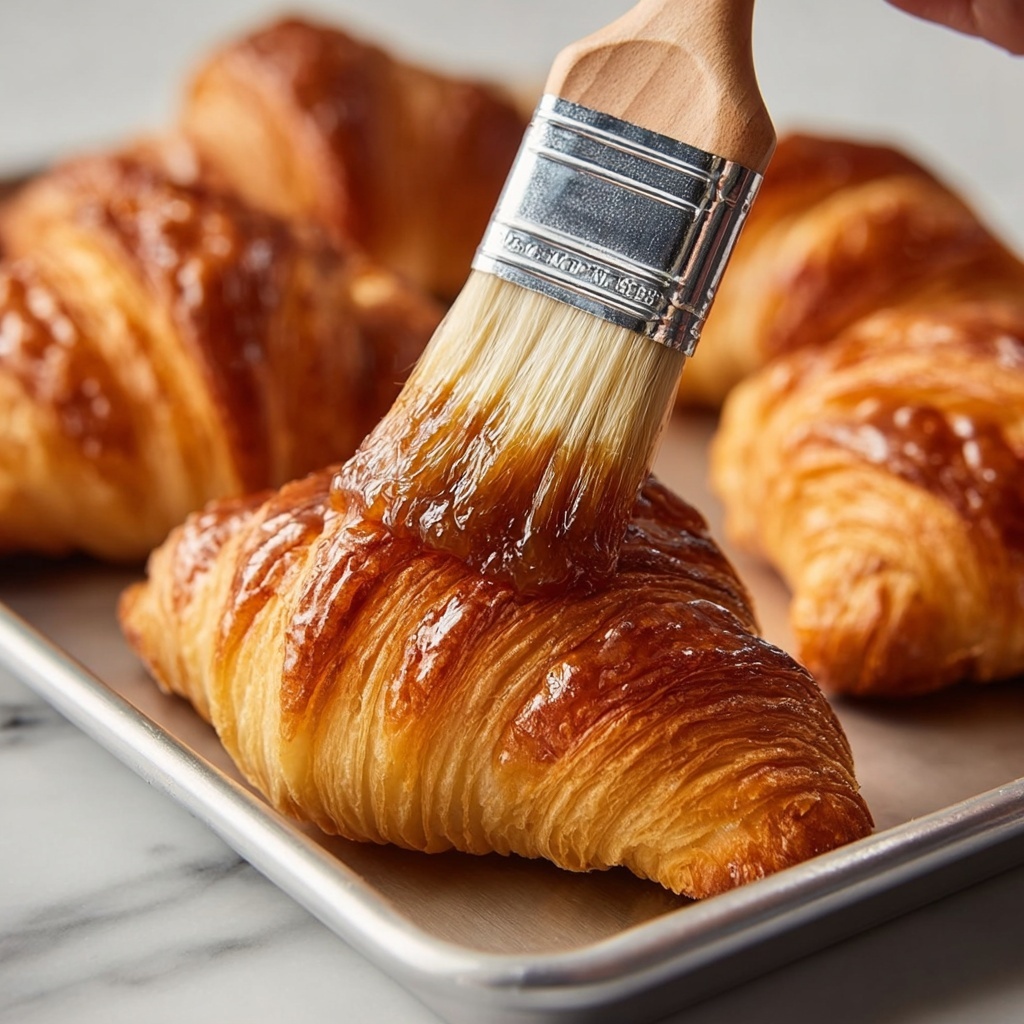
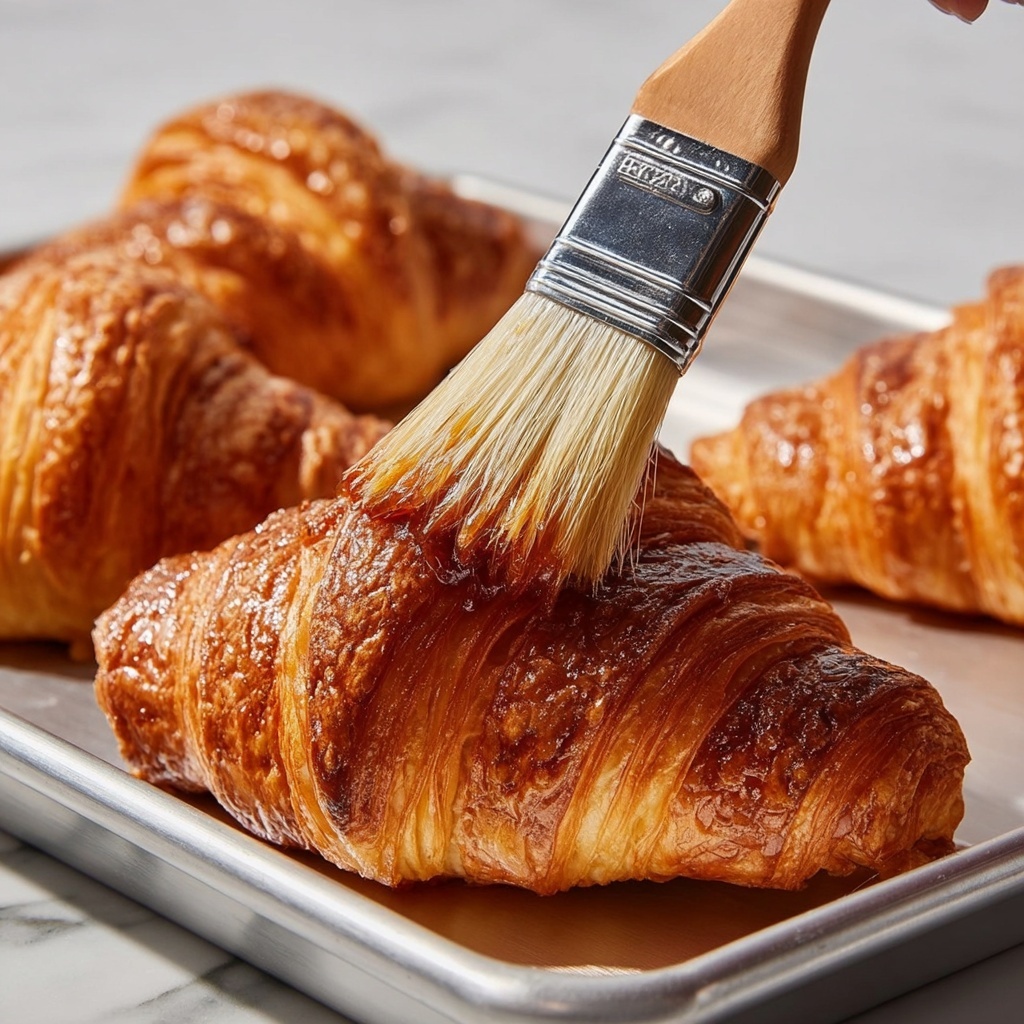
Preheat your oven to 400°F (200°C). In a small bowl, beat together the egg and milk to make an egg wash. Brush this gently over each croissant to give them that irresistible shiny, golden brown finish once baked.
Step 11: Bake Croissants
Bake your croissants on a baking sheet for 18 to 22 minutes, rotating the pan halfway through to ensure even browning. You will know they’re ready when they have puffed fully and boast a deep golden color that’s almost too pretty to eat.
Step 12: Cool
Remove your croissants from the oven and transfer them onto a wire rack. Let them cool for at least 10 minutes. This resting allows the layers to settle and crisp up for that satisfying crunch with every bite.
How to Serve Classic Flaky Croissants from Scratch Recipe

Garnishes
Classic croissants don’t need much, but a light dusting of powdered sugar can add a lovely sweet touch, especially if serving as a breakfast treat or dessert. Fresh berries, a smear of good jam, or a drizzle of honey can complement the buttery flavor beautifully.
Side Dishes
Pair these flaky croissants with a cup of rich coffee or tea for a simple, tranquil morning. They also make an excellent accompaniment to soft cheeses, scrambled eggs, or fresh fruit for a more hearty brunch spread that will impress your guests.
Creative Ways to Present
For something special, slice croissants horizontally and fill them with ham, cheese, and a touch of mustard for a gourmet sandwich. Or serve them warm with melted chocolate or almond cream inside for an indulgent twist on the Classic Flaky Croissants from Scratch Recipe.
Make Ahead and Storage
Storing Leftovers
If you have any leftover croissants, store them in an airtight container at room temperature for up to two days. This keeps them from drying out while preserving the delicate layers.
Freezing
You can freeze baked croissants by wrapping them individually in plastic wrap and placing them in a freezer-safe bag. They’ll stay fresh for up to a month, making it easy to enjoy those buttery layers whenever the craving hits.
Reheating
To bring frozen or leftover croissants back to life, warm them in a 350°F (175°C) oven for about 5 to 7 minutes. This quick reheat revives the crisp exterior and soft interior, nearly like fresh from the oven.
FAQs
Is making croissants from scratch difficult?
While the process requires patience and attention to detail, particularly with the folding and chilling stages, it’s definitely doable for home bakers. Following the Classic Flaky Croissants from Scratch Recipe closely makes success very attainable.
Can I use margarine or a different type of butter?
For the best flavor and flakiness, use unsalted butter with a high-fat content. Margarine or butter substitutes usually have higher water content, which can affect the dough’s layers and taste.
How important is keeping the dough cold?
Extremely important! Keeping your dough and butter cold prevents the butter from melting into the dough, which is key to creating distinct layers and that signature flakiness.
Can I make the dough ahead of time?
Absolutely! You can prepare and chill the dough overnight between folds to slow fermentation, making the process more manageable and flavors richer.
What’s the best way to shape croissants neatly?
Use a sharp knife or pizza cutter to get clean triangle edges, and gently stretch the dough at the base before rolling toward the tip. This gives you elegant, classic crescent shapes.
Final Thoughts
You truly can’t beat the joy of biting into freshly baked croissants made with your own hands. This Classic Flaky Croissants from Scratch Recipe is a labor of love that rewards you with delicate, buttery layers and an unmatched bakery experience at home. So roll up your sleeves, gather your ingredients, and start your croissant adventure—you won’t regret it!
“`
Print
Classic Flaky Croissants from Scratch Recipe
- Prep Time: 1 hour 20 minutes
- Cook Time: 22 minutes
- Total Time: 2 hours 30 minutes
- Yield: 12 croissants
- Category: Breakfast Pastry
- Method: Baking
- Cuisine: French
Description
Classic Flaky Croissants from Scratch are buttery, layered pastries made by encasing cold butter within dough and performing multiple folds to create delicate, flaky layers. This traditional French recipe produces golden, crescent-shaped croissants with a crisp exterior and tender, airy interior perfect for breakfast or snacks.
Ingredients
Dough Ingredients
- 4 cups (500g) all-purpose flour
- 1/4 cup (50g) granulated sugar
- 1 tablespoon (10g) salt
- 1 tablespoon (10g) active dry yeast
- 1 1/4 cups (300ml) warm milk
- 2 tablespoons unsalted butter, melted
Butter Block
- 1 cup (225g) unsalted butter, cold and shaped into a flat square
Egg Wash
- 1 egg
- 1 tablespoon milk
Instructions
- Mix and knead the dough: In a large bowl or stand mixer, combine the flour, sugar, and salt. Dissolve the active dry yeast in warm milk and let it sit for 5 to 10 minutes until foamy. Add this yeast mixture and melted butter to the dry ingredients, then knead until a smooth dough forms, about 3 to 5 minutes. Shape into a rectangle, wrap with plastic wrap, and refrigerate for 1 hour.
- Prepare the butter block: Place the cold unsalted butter between parchment paper and use a rolling pin to form a 6-inch square. If it becomes too soft, chill it again to maintain firmness.
- Encapsulate the butter with dough: Roll the chilled dough into a 12-inch square. Place the butter block diagonally in the center, then fold the corners of the dough over the butter to completely enclose it, like wrapping a gift.
- First fold (turn): Roll the dough with the butter inside into an 8 by 20 inch rectangle. Fold this rectangle into thirds like a letter. Wrap and chill in the refrigerator for 30 minutes.
- Repeat folds: Repeat the rolling, folding into thirds, and chilling process two more times for a total of three turns to build layers. Keep the dough cold for best results.
- Roll out final dough: After the last chilling, roll the dough into a large rectangle about 1/4-inch thick.
- Cut triangles: Trim edges and cut the dough into triangles approximately 5 inches wide at the base with a sharp knife or pizza cutter.
- Shape croissants: Starting from the wide base of each triangle, gently stretch and roll it toward the tip to form the classic crescent shape.
- Proof croissants: Cover the shaped croissants loosely and let them rise at room temperature for 1.5 to 2 hours until puffed and slightly risen.
- Preheat oven and prepare egg wash: Preheat oven to 400°F (200°C). Beat together the egg and milk and gently brush over croissants for a glossy finish.
- Bake croissants: Place croissants on a baking sheet and bake for 18 to 22 minutes until fully puffed and deep golden brown, rotating the pan halfway through to ensure even baking.
- Cool: Remove croissants from oven and transfer to a wire rack to cool for at least 10 minutes to set flaky layers before serving.
Notes
- Keep the butter cold during rolling to ensure flaky layers.
- Chilling the dough between folds prevents butter from melting into the dough.
- Proofing at room temperature helps croissants become airy and light.
- Use a sharp knife or pizza cutter to cleanly cut triangles for even shaping.
- If butter softens too much while preparing, return it to the refrigerator.
- Brush with egg wash just before baking for a golden glossy crust.