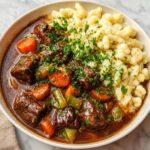
Description
This authentic German Goulash recipe offers a hearty, flavorful stew featuring tender beef chuck simmered with onions, bell peppers, garlic, and a rich blend of paprika and spices. Slow-cooked to perfection, it delivers a comforting meal perfect for family dinners, served traditionally with spätzle or your favorite side like mashed potatoes or crusty bread.
Ingredients
Scale
Meat and Vegetables
- 2 lbs beef chuck, cut into 1-inch cubes
- 2 large onions, chopped
- 2 red bell peppers, seeded and chopped
- 2 yellow bell peppers, seeded and chopped
- 4 cloves garlic, minced
Spices and Seasonings
- 2 tablespoons sweet paprika
- 1 tablespoon smoked paprika
- 1 teaspoon caraway seeds
- 1/2 teaspoon marjoram
- 1/4 teaspoon cayenne pepper (optional)
- Salt and freshly ground black pepper to taste
- 1 bay leaf
Liquids and Thickener
- 2 tablespoons tomato paste
- 4 cups beef broth
- 1 cup dry red wine (optional)
- 2 tablespoons all-purpose flour
- 1/4 cup cold water (for slurry)
- 1 tablespoon red wine vinegar
- 2 tablespoons olive oil
Garnish and Serving
- Fresh parsley, chopped (for garnish)
- Sour cream (for serving, optional)
Instructions
- Prepare the beef: Pat the beef cubes dry with paper towels and season generously with salt and freshly ground black pepper.
- Brown the beef: Heat olive oil in a large heavy-bottomed pot or Dutch oven over medium-high heat. Working in batches, brown the beef cubes on all sides without overcrowding. Remove and set aside.
- Sauté onions: Add chopped onions to the pot and cook over medium heat until softened and translucent, about 5-7 minutes.
- Cook peppers and garlic: Add chopped red and yellow bell peppers along with minced garlic. Cook for 5-7 minutes, stirring occasionally, until softened and fragrant.
- Add spices: Stir in sweet paprika, smoked paprika, caraway seeds, marjoram, and cayenne pepper if using. Cook for 1 minute, stirring constantly to release aromas.
- Incorporate tomato paste: Stir in tomato paste and cook another minute, stirring continuously.
- Add liquids: Pour in beef broth and dry red wine if using, scraping up any browned bits from the pot bottom for extra flavor.
- Return beef and season: Add the browned beef cubes back to the pot and add the bay leaf.
- Simmer: Bring to a simmer, then reduce heat to low. Cover and cook for 2-3 hours or until beef is very tender, checking occasionally and adding more broth if needed to keep beef submerged.
- Make flour slurry: In a small bowl, whisk together all-purpose flour and 1/4 cup cold water until smooth.
- Thicken goulash: Gradually whisk the flour slurry into the simmering stew. Stir constantly for 2-3 minutes until thickened slightly.
- Finish: Remove the bay leaf, stir in red wine vinegar, and adjust salt and pepper to taste.
- Serve: Serve hot, garnished with chopped fresh parsley and a dollop of sour cream if desired. Traditionally accompanied by spätzle, mashed potatoes, egg noodles, or crusty bread.
Notes
- For a deeper flavor, use smoked paprika in combination with sweet paprika.
- Red wine is optional but adds richness; choose a dry red wine for best results.
- Do not overcrowd the pot when browning beef to ensure proper searing.
- If unable to find spätzle, mashed potatoes or egg noodles make excellent alternatives.
- Sour cream garnish is traditional but optional depending on preference.
- Adjust cayenne pepper to control the level of heat.
- This goulash tastes even better the next day as the flavors develop.