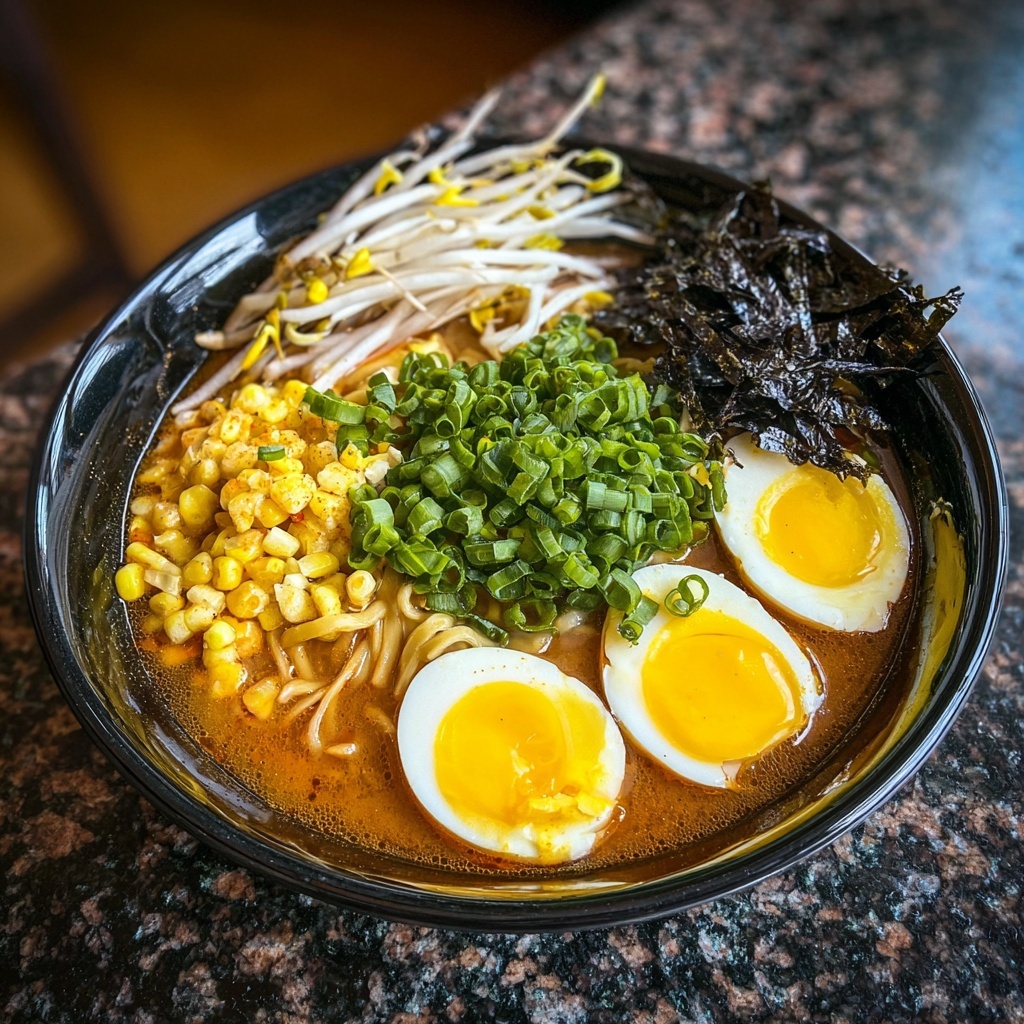
If you’re craving a bowl of comfort that’s both soul-warming and deliciously satisfying, this Miso Ramen Recipe is an absolute must-try. Rich, savory broth infused with miso paste creates the perfect base for springy ramen noodles, topped with tender soft-boiled eggs, fresh bean sprouts, and crisp green onions. Every spoonful offers a harmonious blend of flavors and textures that feel like a cozy hug in a bowl. Whether you’re a ramen novice or a longtime fan, this recipe is straightforward, approachable, and endlessly rewarding to make at home.
Ingredients You’ll Need
This Miso Ramen Recipe uses simple but essential ingredients that come together to deliver depth, texture, and vibrant color. Each element plays its role, from the hearty broth to the fresh toppings, ensuring your ramen is a balanced masterpiece.
- 4 cups chicken or vegetable broth: This forms the flavorful liquid base, warming and comforting with every slurp.
- 2 tbsp white miso paste: Adds that signature umami punch that defines miso ramen’s soul.
- 1 tbsp soy sauce: Brings a salty depth and enriches the broth’s complexity.
- 1 tsp sesame oil: Delivers a subtle nuttiness that rounds out the flavors beautifully.
- 200 g ramen noodles: The star texture of the dish, chewy and perfect for soaking up broth.
- 2 soft-boiled eggs (halved): Creamy yolks add rich silkiness to every bite.
- 1 cup bean sprouts: Introduce freshness and crunch that brighten the bowl.
- 2 green onions (sliced): Provide a mild sharpness and vibrant green color.
- 1 sheet nori (torn into strips): Adds a subtle oceanic flavor and lovely visual contrast.
How to Make Miso Ramen Recipe
Step 1: Prepare the Broth
Start by heating your chicken or vegetable broth in a medium pot over medium heat until it reaches a simmer. This is where the flavor base begins to form, setting the stage for the rich miso infusion.
Step 2: Incorporate the Miso and Seasonings
Whisk in the white miso paste, soy sauce, and sesame oil carefully into the simmering broth. Stir well to dissolve the miso completely, allowing those deep umami notes and nutty undertones to develop. Then let the broth gently simmer for about 5 minutes to marry all the flavors.
Step 3: Cook the Ramen Noodles
While the broth simmers, prepare the ramen noodles according to the package instructions. Once cooked, drain them well and set aside so they stay perfectly chewy and ready to soak up the broth.
Step 4: Assemble Your Ramen Bowls
Divide the cooked noodles evenly between two sturdy bowls. Then ladle the steaming-hot miso broth over the noodles, ensuring every strand gets coated in that luscious liquid gold.
Step 5: Add the Toppings
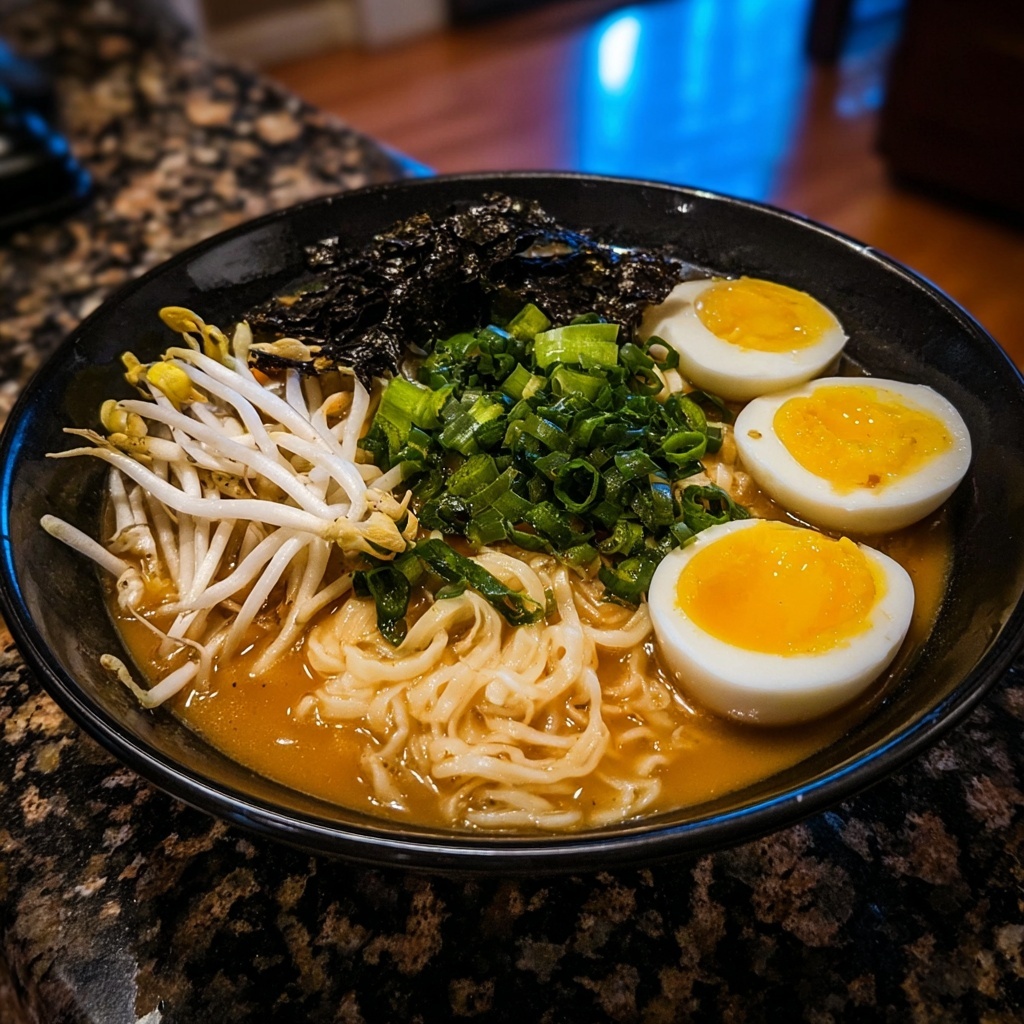
Now comes the fun part—topping your ramen! Nestle the soft-boiled egg halves on the noodles, scatter fresh bean sprouts and sliced green onions, and finally sprinkle with torn nori strips. Your bowl should look inviting, colorful, and packed with texture.
How to Serve Miso Ramen Recipe
Garnishes
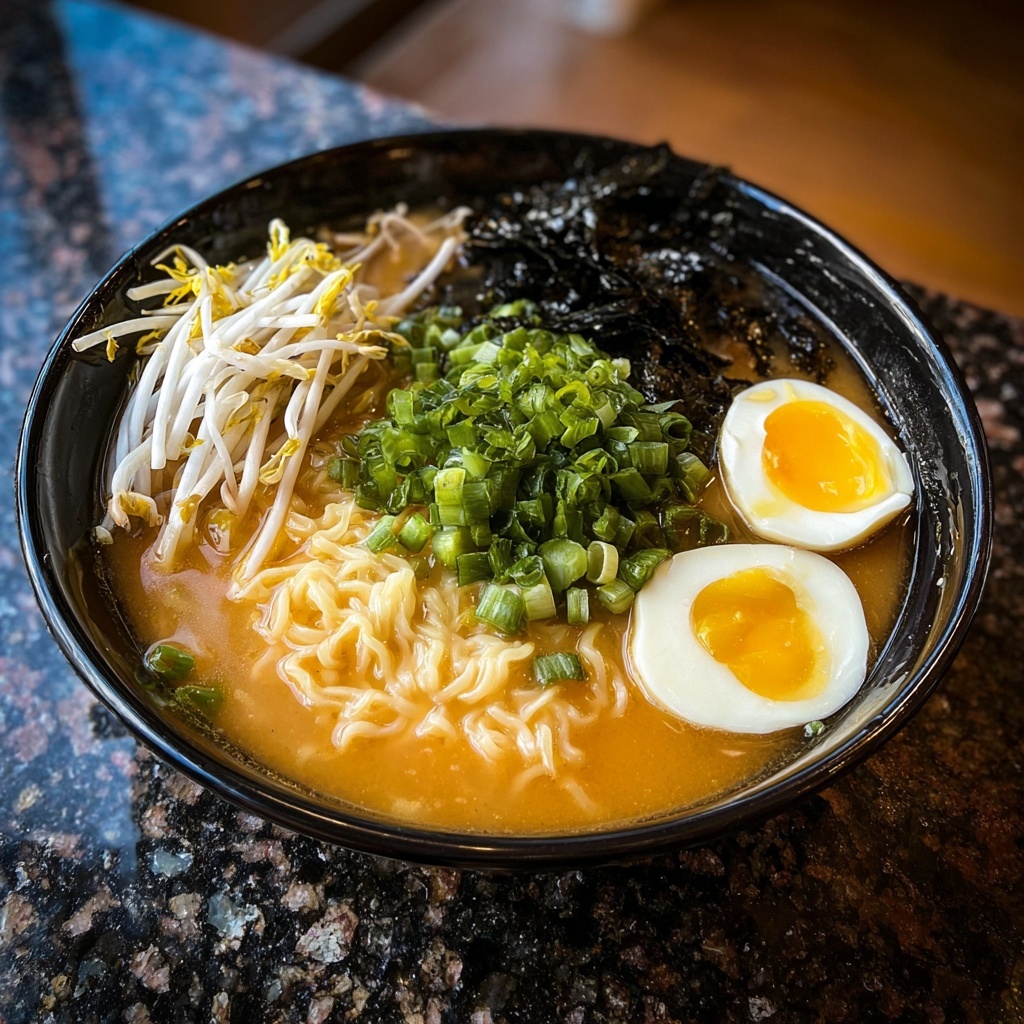
The beauty of this Miso Ramen Recipe is how the toppings elevate the whole experience. Soft-boiled eggs add a creamy richness, while crisp bean sprouts bring freshness. Bright green onions cut through the richness, and nori strips introduce just the right oceanic hint. Feel free to add a drizzle of chili oil or a sprinkle of toasted sesame seeds if you love an extra kick.
Side Dishes
Pair your miso ramen with simple sides like steamed edamame, pickled vegetables, or a light cucumber salad. These sides complement the warm, savory bowl without overpowering it, creating a balanced meal that’s both fulfilling and refreshing.
Creative Ways to Present
Serving your miso ramen in a wide, shallow bowl allows the toppings to shine and makes slurping easier. For a special occasion, consider adding thinly sliced grilled pork or tofu cubes for extra protein. You can also jazz it up by garnishing with fresh cilantro or lime wedges for a zesty twist that wakes up the palate.
Make Ahead and Storage
Storing Leftovers
If you have any leftover miso ramen broth or noodles, store them separately in airtight containers in the refrigerator. Keeping components separate helps maintain the noodles’ texture and prevents them from becoming soggy overnight.
Freezing
While broth freezes well, it’s best not to freeze the cooked noodles or fresh toppings. Freeze the broth alone in a freezer-safe container for up to two months, then thaw it gently before reheating.
Reheating
To reheat, warm the broth gently on the stove until simmering. Cook fresh noodles or reheat just enough for your serving to maintain that perfect chewiness. Add fresh toppings after assembling to keep everything bright and crisp.
FAQs
Can I use yellow or red miso instead of white miso in this recipe?
Absolutely! White miso has a mild, slightly sweet flavor perfect for this ramen, but yellow or red miso will introduce a deeper, more robust taste. Adjust the amount slightly to your preference since darker misos are stronger in flavor.
Is it possible to make this recipe vegetarian or vegan?
Yes, simply use vegetable broth instead of chicken broth and skip the soft-boiled eggs. You can add tofu or mushrooms for extra protein, and the miso paste ensures the broth stays flavorful.
How do I get perfectly soft-boiled eggs?
Boil eggs for about 6 to 7 minutes, then immediately plunge them into ice water to stop cooking. This method gives you firm whites with a creamy, slightly runny yolk that’s ideal for ramen.
Can I store assembled ramen for later?
It’s best to enjoy ramen immediately after assembling. The noodles tend to absorb broth and become mushy if left too long, so storing components separately and assembling fresh each time is ideal.
What makes the broth so flavorful in this Miso Ramen Recipe?
The combination of miso paste, soy sauce, and sesame oil layered onto a good quality broth creates a unique umami-rich profile. Simmering these ingredients together allows them to meld into a deeply satisfying soup base.
Final Thoughts
This Miso Ramen Recipe is a wonderful bowl of comfort that is surprisingly simple to whip up yet endlessly delicious. It’s the kind of meal that feels both special and approachable, perfect for cozy nights or whenever you need a flavorful hug from the inside. Give it a go, and I promise you’ll find yourself coming back to this recipe again and again.
Print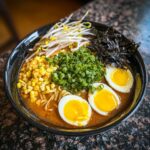
Miso Ramen Recipe
- Prep Time: 10 minutes
- Cook Time: 25 minutes
- Total Time: 35 minutes
- Yield: 2 servings
- Category: Soup
- Method: Stovetop
- Cuisine: Japanese
Description
A comforting and flavorful Miso Ramen recipe featuring a savory miso broth, tender ramen noodles, and traditional toppings like soft-boiled eggs, bean sprouts, green onions, and nori strips. Perfect for a quick and satisfying Japanese-inspired meal.
Ingredients
Broth
- 4 cups chicken or vegetable broth
- 2 tbsp white miso paste
- 1 tbsp soy sauce
- 1 tsp sesame oil
Noodles & Toppings
- 200 g ramen noodles
- 2 soft-boiled eggs (halved)
- 1 cup bean sprouts
- 2 green onions (sliced)
- 1 sheet nori (torn into strips)
Instructions
- Heat the broth: In a medium pot, heat the chicken or vegetable broth over medium heat until it reaches a gentle simmer.
- Add seasonings: Whisk in the white miso paste, soy sauce, and sesame oil into the simmering broth. Let it simmer gently for 5 minutes to combine the flavors.
- Cook the noodles: Prepare the ramen noodles according to package instructions, usually boiling for 3-4 minutes. Drain the noodles thoroughly and set them aside.
- Assemble the bowls: Divide the cooked noodles between two serving bowls. Pour the hot miso broth evenly over the noodles.
- Add toppings: Garnish each bowl with halved soft-boiled eggs, fresh bean sprouts, sliced green onions, and torn nori strips. Serve immediately for optimal taste and texture.
Notes
- Use either chicken or vegetable broth depending on dietary preference for a richer or vegetarian option.
- Soft-boiled eggs can be prepared by boiling eggs for 6-7 minutes, then cooling in ice water before peeling and halving.
- Adjust soy sauce levels to taste for saltiness.
- For a spicier version, add chili oil or shichimi togarashi as toppings.
- Ramen noodles can be substituted with udon or soba if desired, but cooking times may vary.